




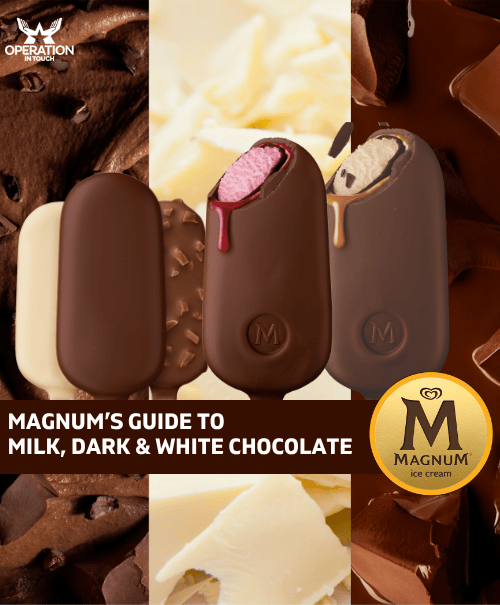
Magnum’s Guide to Milk, Dark & White Chocolate
When it comes to life’s most decadent pleasures, few topics spark as much spirited debate as dark chocolate vs milk chocolate vs white chocolate. What sets them apart? And is one superior to the other?
The truth is, whether it’s the bold intensity of dark, the creamy smoothness of milk, or the melt-in-your-mouth sweetness of white, each offers something different. It’s not about which one wins. It’s about what each brings to the table: how it tastes, what it pairs with, and what you’re in the mood for.
So let’s unwrap the nuances. From flavor and texture to the role each plays in Magnum’s chocolate-coated ice cream bars (Link opens in new window.), discover what makes every type a masterpiece in its own right.
Breaking Down the Chocolate Trinity
Milk Chocolate
Milk chocolate is arguably the most iconic of the three. It’s smooth, creamy, and instantly comforting. Made from a blend of chocolate liquor (ground cocoa nibs), cocoa butter, sugar, and milk (in powdered, liquid, or condensed form), it strikes a beautiful balance between richness and sweetness.
The cocoa content typically ranges from 20% to 40%, depending on the recipe, though by FDA standards it must contain at least 10% chocolate liquor. That makes milk chocolate less intense than dark, yet more nuanced and indulgent than white. It’s a middle ground that appeals to most people.
Dark Chocolate
Dark chocolate is celebrated for its bold, sophisticated flavor and higher cocoa content, typically ranging from 50% up to 90%, though the FDA requires a minimum of 35% cocoa solids to qualify as dark chocolate. Unlike milk chocolate, it contains little to no milk solids and less sugar, resulting in a more intense taste with complex, bittersweet notes.
Its texture is smooth yet slightly firmer than milk chocolate. In the classic debate of dark chocolate vs milk chocolate, dark is often the more “grown-up” choice, perfect for pairing with red wine, espresso, or tart fruits.
White Chocolate
White chocolate is the smoothest and sweetest of the three, prized for its buttery richness and unmistakable ivory hue. Its signature melt-in-your-mouth quality comes from its main ingredient: cocoa butter
Unlike milk or dark chocolate, white chocolate contains no cocoa solids which gives it its pale color and mellow flavor. It’s made with a blend of cocoa butter, milk, and sugar, and while some debate whether it qualifies as “real” chocolate, there’s no question it comes from the cocoa bean. It may lack the cocoa nibs found in darker varieties but it’s chocolate through and through.
White chocolate lends itself beautifully to pairings like tart berries, tropical fruit, or the earthy umami of matcha, which balances its sweetness perfectly.
Magnum and Chocolate: Made to Be Savored
Every Magnum chocolate-coated ice cream bar begins with one question: which chocolate unlocks the most indulgent flavor experience?
In the Double Caramel Ice Cream Bar, the golden caramel sauce is wrapped in a milk chocolate shell — the creaminess of the chocolate perfectly complementing the buttery richness beneath. For the Chocolate Duet Ice Cream Bar, the pairing is more nuanced: sweet vanilla ice cream and a swirl of tart raspberry meet a full dip in silky white chocolate, finished with a delicate half dip in smooth milk chocolate. This creates a balance of sweetness and depth. And in the Almond Duet Ice Cream Bar, brown sugar almond butter is elevated with layers of flavor: first dipped in creamy milk chocolate with almonds, then half-dipped in bold dark chocolate for a touch of intensity.
Read the original article by clicking here. (Link opens in new window.)